
Today is World Heart Day.
For me, that’s personal.
Fourteen years ago, at the age of 50, I learned the hard way that heart disease doesn’t always give you a warning—or at least not one you recognize. I survived a major cardiac event, and much of the work I’ve done since then has centered around one simple idea:
What if we could find the risk BEFORE the heart attack or stroke?
Because here’s the part that should get our attention.
Nearly 4 in 10 American adults—38.7%—now meet the criteria for metabolic syndrome. Read the JAMA research
That number stopped me.
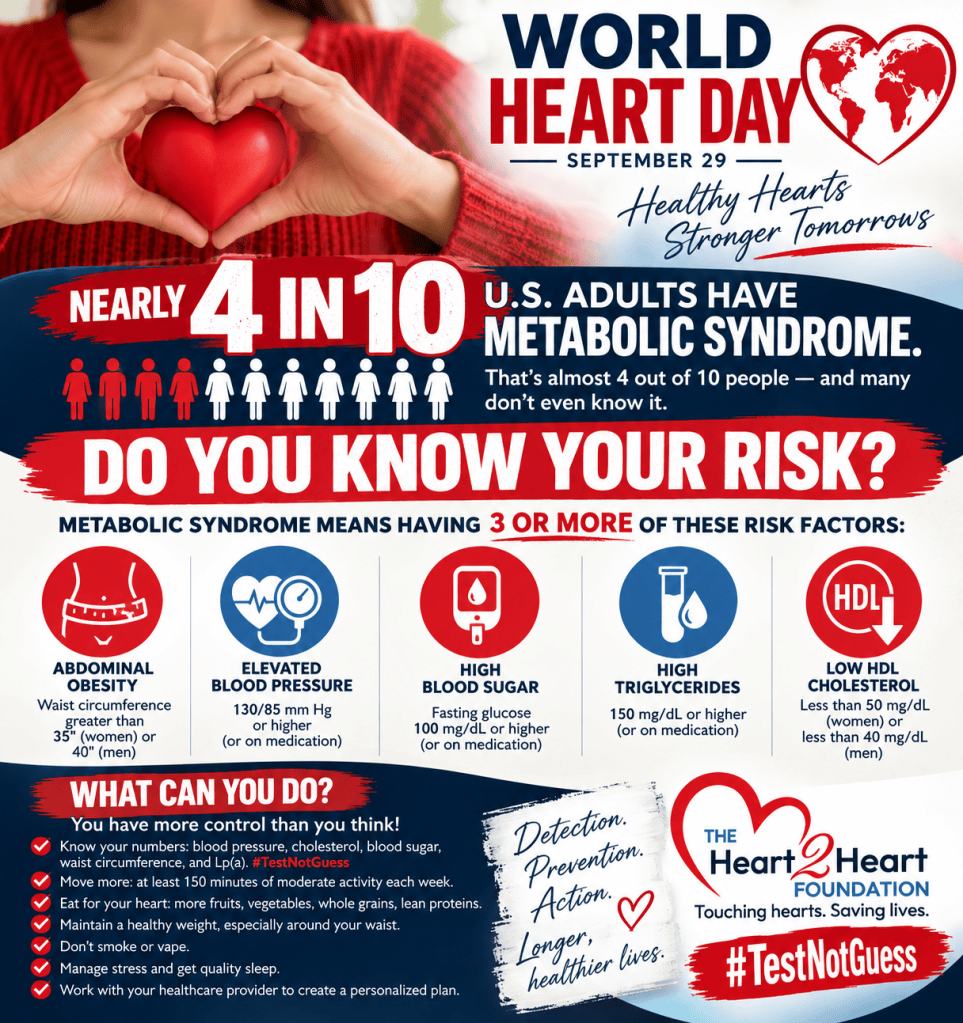
Metabolic syndrome isn’t some rare disease. It simply means that a person has three or more of five common cardiovascular risk factors:
High blood pressure. High blood sugar. High triglycerides. Low HDL—the “good” cholesterol. And excess weight around the waist.
Sound familiar?
These are things many of us live with every day. We take a blood pressure pill. Our sugar is “a little high.” We’ve gained some weight around the middle. The doctor tells us to watch our triglycerides.
Individually, we may shrug them off.
But when they begin stacking up, our risk begins stacking up, too.
And that’s what concerns me.
Feeling fine isn’t a heart-health strategy
One of the things I’ve learned through my own experience and through years of heart-health advocacy is that you can feel perfectly fine and still be at significant cardiovascular risk.
High blood pressure may have no symptoms.
High cholesterol usually doesn’t announce itself.
Prediabetes can quietly progress for years.
And elevated Lp(a)—an important, largely inherited cardiovascular risk factor—usually gives you absolutely no indication that it’s there.
That’s why I keep coming back to the same message:
TEST. DON’T GUESS.
The new 2026 cholesterol guideline recommends that adults have Lp(a) tested at least once in their lifetime. Depending on your individual risk and family history, your healthcare provider may also consider tests such as ApoB or a coronary artery calcium scan to help get a clearer picture of your cardiovascular risk. 2026 ACC/AHA Cholesterol Guideline information
That’s a very different conversation from simply hearing, “Your cholesterol looks okay.”
I want to know my numbers.
And I want you to know yours.
So what CAN we do?
Here’s the good news.
There are risk factors we can’t change—our age, our genetics and our family history among them.
But there is a great deal that we can do.
Know your blood pressure—and don’t just check it once a year.
Know your cholesterol numbers, including your LDL, HDL and triglycerides.
Know your blood sugar. Ask about fasting glucose and A1C.
Talk with your healthcare provider about whether additional testing makes sense based on your history and risk.
Move your body. The American Heart Association recommends at least 150 minutes of moderate physical activity each week. That doesn’t mean you suddenly have to become a runner. Walk. Garden. Dance. Ride a bike. Start where you are.
Eat more real food—vegetables, fruit, beans, whole grains, nuts, fish and lean proteins—and less of the heavily processed stuff that has become such a large part of the American diet.
Don’t smoke or vape.
Get serious about sleep.
Manage stress.
And if your doctor has prescribed medication for your blood pressure, cholesterol or diabetes, take it.
These aren’t glamorous interventions.
They save lives.
And here’s something else I want us to understand
Heart disease is still the leading cause of death in America.
According to the American Heart Association, someone in the United States dies from cardiovascular disease approximately every 34 seconds. American Heart Association — Heart Disease & Stroke Statistics
Think about that.
And then think about how many people around us are walking around with multiple cardiovascular risk factors and don’t know it.
That’s why I don’t believe prevention should begin when someone becomes a cardiology patient.
It should begin long before that.
It begins in our homes.
In our primary-care offices.
At community screenings.
With conversations about family history.
And sometimes it begins with something as simple as rolling up your sleeve and checking your blood pressure.
My challenge to you this World Heart Day
Don’t just “take care of your heart.”
That’s too vague.
Know your risk.
Can you tell me your blood pressure?
Your LDL?
Your triglycerides?
Your blood sugar or A1C?
Do you know whether heart disease or stroke runs in your family?
Have you ever had your Lp(a) checked?
If you can’t answer those questions, don’t be embarrassed.
Find out.
Make the appointment. Get the blood work. Ask the questions.
Because sometimes the most important information about your heart is the information you discover before anything happens.
I was fortunate enough to get another chapter.
Fourteen years later, I’m still here—and I don’t take that for granted.
So on World Heart Day, my message is pretty simple:
Detection. Prevention. Action.
Let’s stop waiting for the heart attack, stroke or diagnosis to make heart health important.
#TestNotGuess.
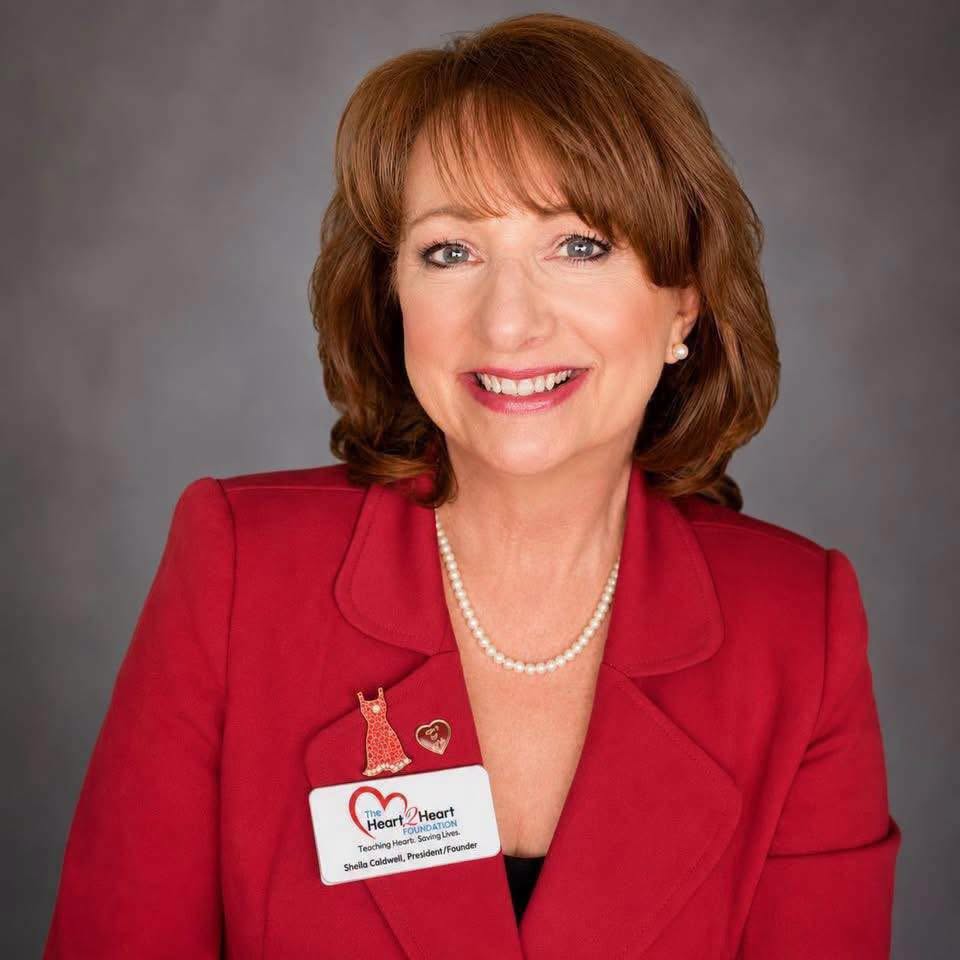
About the Author: Sheila Stout Caldwell is a heart attack survivor, heart-health advocate and founder of The Heart2Heart Foundation, which she established in 2012 following her own life-changing cardiac event. For more than a decade, she has worked to help women and their loved ones better understand their cardiovascular risk, recognize the warning signs and take action before a heart attack or stroke occurs. Her message is simple: Know your risk. Know your numbers. Early detection, diagnosis and intervention can save lives!

