
“1,162.”
Rebecca Wright doesn’t hesitate for a second when I ask her how many homes were damaged or destroyed in Johnson County by Hurricane Helene. She also doesn’t hesitate when I ask how many had been rendered unlivable.
“Thirty percent.”
That’s close to 350 displaced families.
At that point, this enormous crisis was front of mind for everyone in the county, and people came together to address it. Wright, the Executive Director of the Johnson County Long Term Recovery Group, has been there since March 2025, first as the Volunteer Coordinator and now as the Director. She has noticed that while the needs are still enormous, the public focus has dwindled.
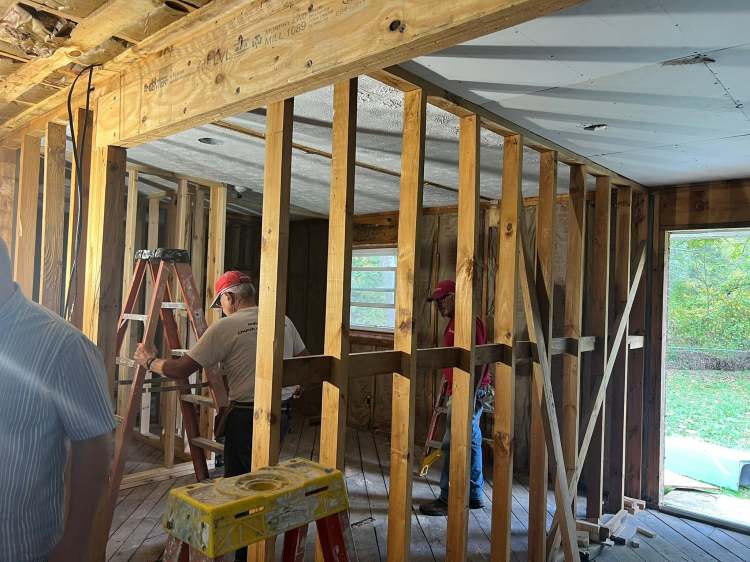
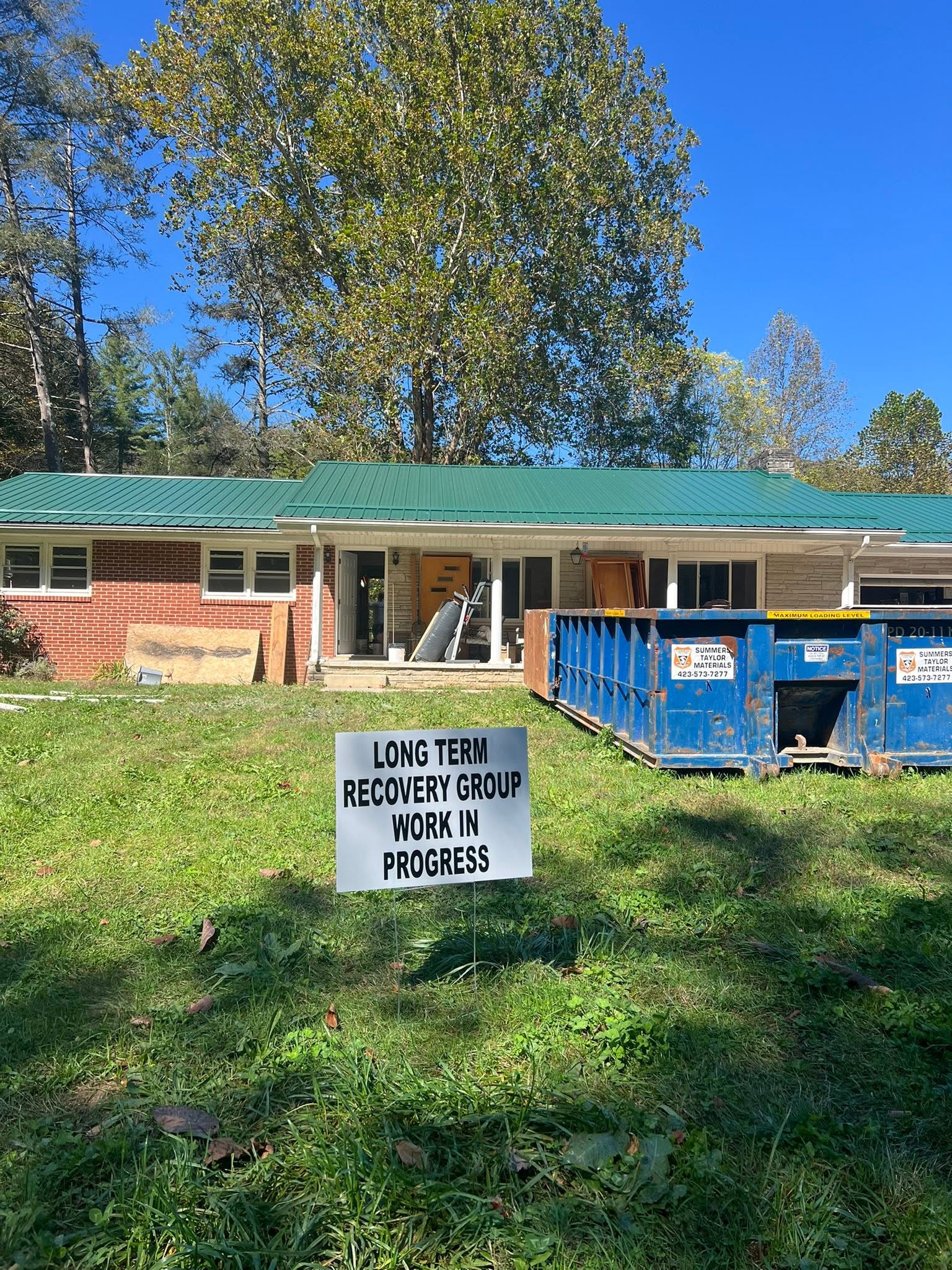
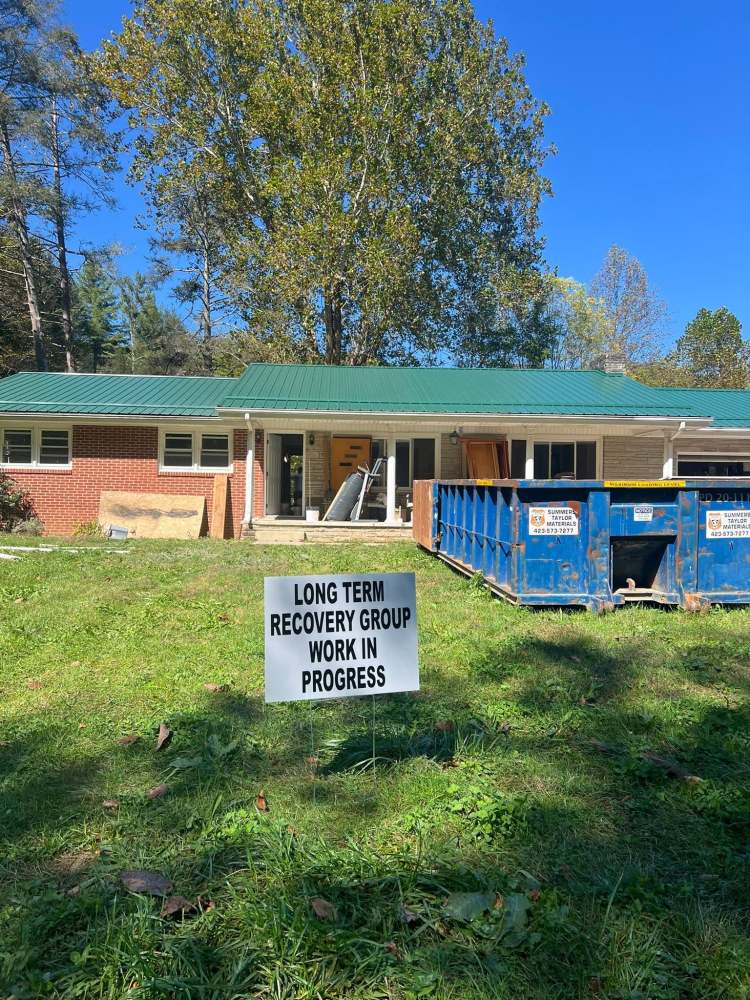
In the two years since, the Long Term Recovery Group (LTRG), working with community partners, has restored 562 homes. Those homes are now considered recovered, their cases closed. Wright estimates that close to 700 families countywide have been able to return to some measure of stability. But obviously, just from the math, there is a long, long way to go. LTRG has 174 open cases remaining, and because they have reached the stage of full home reconstruction, much of the work they are doing now is about getting families out of temporary housing and back into stable homes.
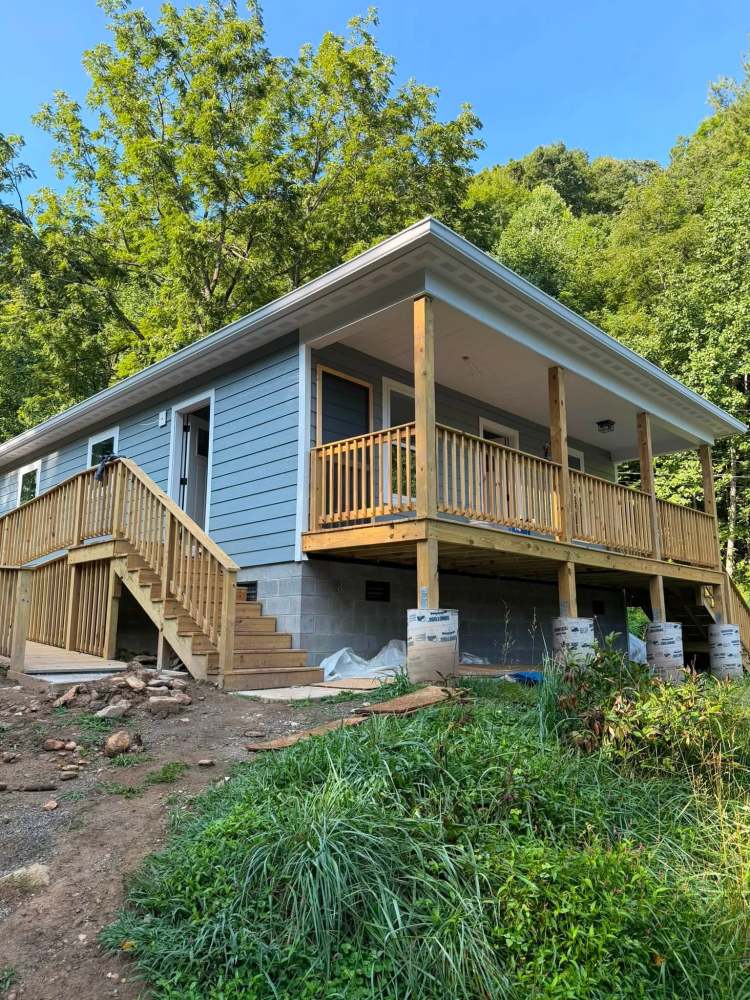
Recently, a dedication was held for the home Mennonite and Amish volunteers built for Raymond Forrester. The newly elected sheriff was there, as was the mayor and one recently elected county commissioner. Everyone was moved by the experience, and everyone was grateful for the volunteers from Amish communities in Indiana, many of them in their teens, who had built the house.
Wright says seven full home builds have already been completed, with seven more underway. Her goal is to have 14 completed by the end of 2026, while continuing extensive repair work alongside the new construction.
When I ask her what she needs from the community in order to keep making these—well, miracles—happen for the families devastated by Hurricane Helene, she is blunt.
“I need them to step up. We can’t build houses on Facebook. We can’t build houses bickering back and forth. Step up. Get a hammer. Get a nail. Get a broom. Help us.”
VOLUNTEER HOUSING IS A MUST
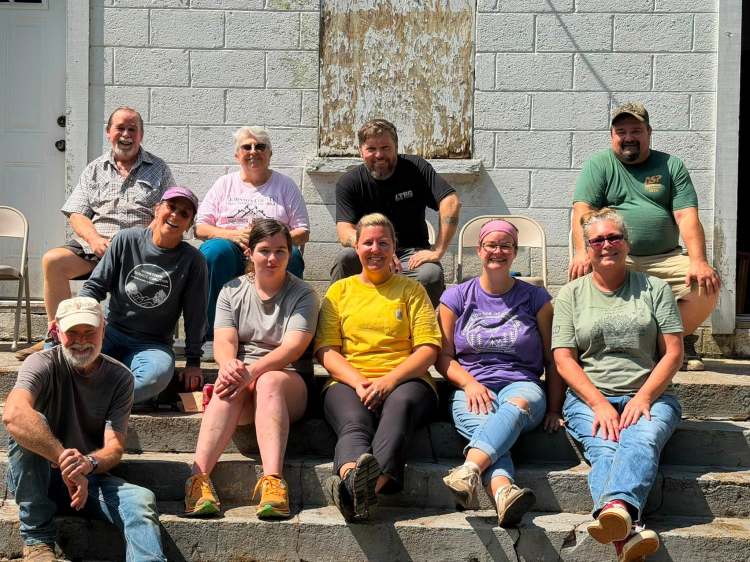
One of the immediate issues she is facing is finding a way to house the many volunteers working on the homes. Wright identifies volunteer housing in Johnson County as one of the biggest obstacles facing the recovery effort, which she estimates will continue for another two years.
There are unique challenges with volunteer groups. When they travel together to a region to put their hearts and hands to work, they don’t really want to be scattered around the county at the end of the day. Understandably, they want to be together.
This challenge rises to the level of necessity when talking about the teenage men and women who have stepped up from the Mennonite and Amish communities.
“Their community is different. Their youth are the ones acquiring these skills. They come down here to shadow these people so they can go build on their own. And the community is tight-knit. They don’t want to be beside a beer store. They’re teaching their youth. They are praying together, eating together, all the things that a family does under one roof. And there’s 30 of them. So it has to be a large space.”
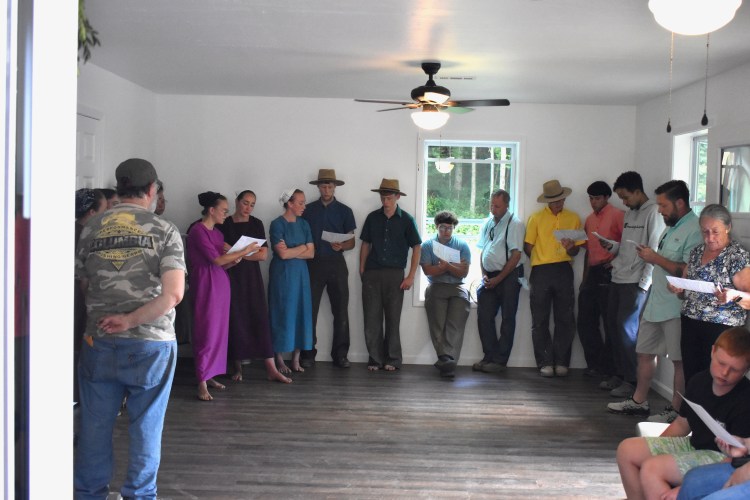
And so far, despite all her efforts, Wright has not been able to find such a space in Johnson County.
“There’s so many factors in that. You have four campers, five trucks, five vans, five trailers, one big tool trailer, and two shower trailers. All those things have to be parked.”
The result is that the volunteers are being housed in neighboring Carter County and are driving every day from Elizabethton to locations in Johnson County to rebuild the lives of our residents.
One location, according to Wright, ticks all the boxes. That location is the Forge Creek Community Center, formerly Forge Creek Elementary, which belongs to Johnson County but was leased to the Friends of Forge Creek in 2018 for $1, with a term of 100 years.
The Friends of Forge Creek operate the building as a community center, which features regular yard sales and amateur wrestling and is available to rent for events such as birthday parties.
Wright approached the county to ask if the center could be used temporarily to house the Amish volunteers. Under the terms of the lease, the county’s ability to direct the use of the building appears to be limited, and the agreement does not contain an emergency provision allowing the county simply to reclaim the property temporarily.
So Wright and a representative from the Amish group approached the center directly. They were told that the center would make one room and shared use of the kitchen available, but that was it.
“It was like a punch in the gut,” Wright says. “We have [worked so hard] to get these people the help we need, and our community is not stepping up. I can’t even comprehend it at this point. And for our local government to allow people from North Carolina to make these decisions, to me, is very disrespectful for our county and detrimental to our survivors’ well-being. Not only their health, their mental health, their children’s mental health, their children’s health. These are human lives, not a piece of property, not a name on a spreadsheet. These are your citizens of Johnson County. Protect them. Help them recover.”
The lease does make maintenance of the property the responsibility of the Friends of Forge Creek. Wright says she has been told by a former user of the building that roof leaks have caused water damage and mold inside the center. Wright herself has not been inside the building to inspect those conditions.
If the Amish volunteers were housed there, Wright says they would repair the roof, floors, water system and other problems at no cost to the county or the center. She estimates the value of those improvements at at least $300,000. Additionally, the Amish would pay the utilities and insurance for the duration of their stay.
But as of today, the Friends of Forge Creek is still not working with the Long Term Recovery Group or the volunteers. We previously reached out to Forge Creek to get their side of the story and were told, “No comment.” We reached out again for this story, specifically to see if there were any new developments and to ask about the offer to repair the roof. While we can see that our message was received and read, we have not received a response.
Wright acknowledges that other locations have been suggested, and she has looked into them. The closed senior living center on Highway 421 has been suggested, but it is still under investigation by the Tennessee Bureau of Investigation. Local churches have reached out, but there remains difficulty in finding the necessary space.
Wright sees a huge lost opportunity for Johnson County.
“If people were to experience being around them, they would love it,” she says.
And there is an economic cost in terms of food, fuel and recreation.
“People seem to think they are just here to work, but they love to hike, and they love Doe Mountain. They want to explore our county.”
But Wright’s frustration with county government extends beyond Forge Creek.
“I need them to stand up,” she says. “I need them to stand up because that’s what they’re elected to do.”
When I ask whether she is talking specifically about Forge Creek, her answer is immediate: “We’re talking about everything.”
Wright says she wants greater involvement from county departments throughout the recovery process, particularly as LTRG begins turning its attention toward preparing Johnson County for future emergencies. The organization is assembling preparedness trailers and other resources that could eventually be used alongside EMA, EMS, the Sheriff’s Department and other local agencies.
COMMUNITY EVENTS
Wright encourages Johnson County residents to come to one of the Amish volunteers’ weekly “Sharing Nights.”
“Sharing night is where everybody gets up, tells what they do, where they come from, and the survivors get to tell their story. Because they are just as interested in that story and how hope is being rebuilt and how those lives have been changed.”
The Sharing Nights are held every Thursday evening at 6:00 p.m. at 108 Pleasant Beach Road in Elizabethton. Wright points out that they could be held in Johnson County. She has also invited county commissioners to attend, hoping they will see firsthand the relationships developing between the volunteers and the families they are helping.

Additionally, another home dedication, this one for Lori Winebarger, will take place tomorrow afternoon, Friday, September 11, at 1:00 p.m. at 748 Bulldog Road in Trade. Each ceremony includes a home blessing, key presentation, recognition of the partners and volunteers, as well as photographs and fellowship.
On Saturday, a workday is scheduled at the new LTRG location at 1966 Ackerson Creek in Laurel Bloomery. The goal is to get LTRG’s new permanent location ready for the move. They need help with painting, cleaning, yard work, other repairs and organizing. Salt of the Earth is providing a free lunch for everyone who shows up.

On Saturday, September 19, LTRG is putting on a resilience fair from noon until 4:00 p.m. There will be vendor booths, food trucks and kids’ activities, including Touch a Truck with local first responders and Smokey Bear. A short film entitled Helene: Two Years Later will be screened at 12:15 p.m., followed by recognition of LTRG’s community partners. The event will also feature survivor stories, chainsaw demonstrations, emergency preparedness demonstrations, and giveaways of weather radios, muck-out buckets and flood bags while supplies last. The goal of the event is to better prepare the community for another event like Helene.
Recovery is a long road, and there is a lot of road left in Johnson County before the lives disrupted by Helene are restored. The Johnson County Long Term Recovery Group is in it for the long haul, both for the crisis at hand and for what the future might hold.
Wright hopes the community—residents and government together—will realize how much work is left to do and band together once again, as they did in the days after the storm.