By Chad Greever
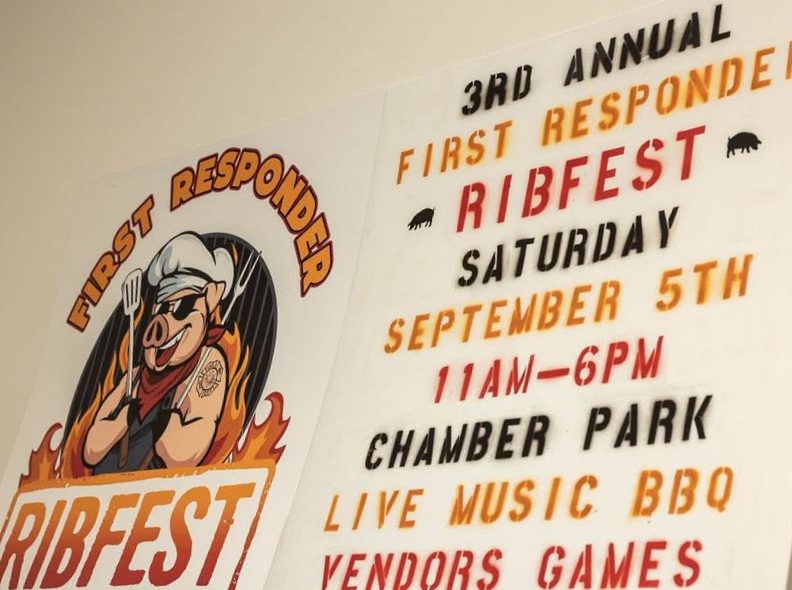
The third annual First Responder Ribfest, an event built around supporting volunteer fire departments and first responders, will be held Saturday, September 5, at Chamber Park in Johnson County. There’s just one rather unusual problem heading into this year’s event: for various reasons, none of Johnson County’s eight volunteer fire departments will be participating.
Ribfest has grown quickly in just three years, drawing thousands of people to support the community and enjoy good food and entertainment, but now there’s a disagreement over who benefits financially, what participating departments contribute, and whether the event should continue operating the way it always has.
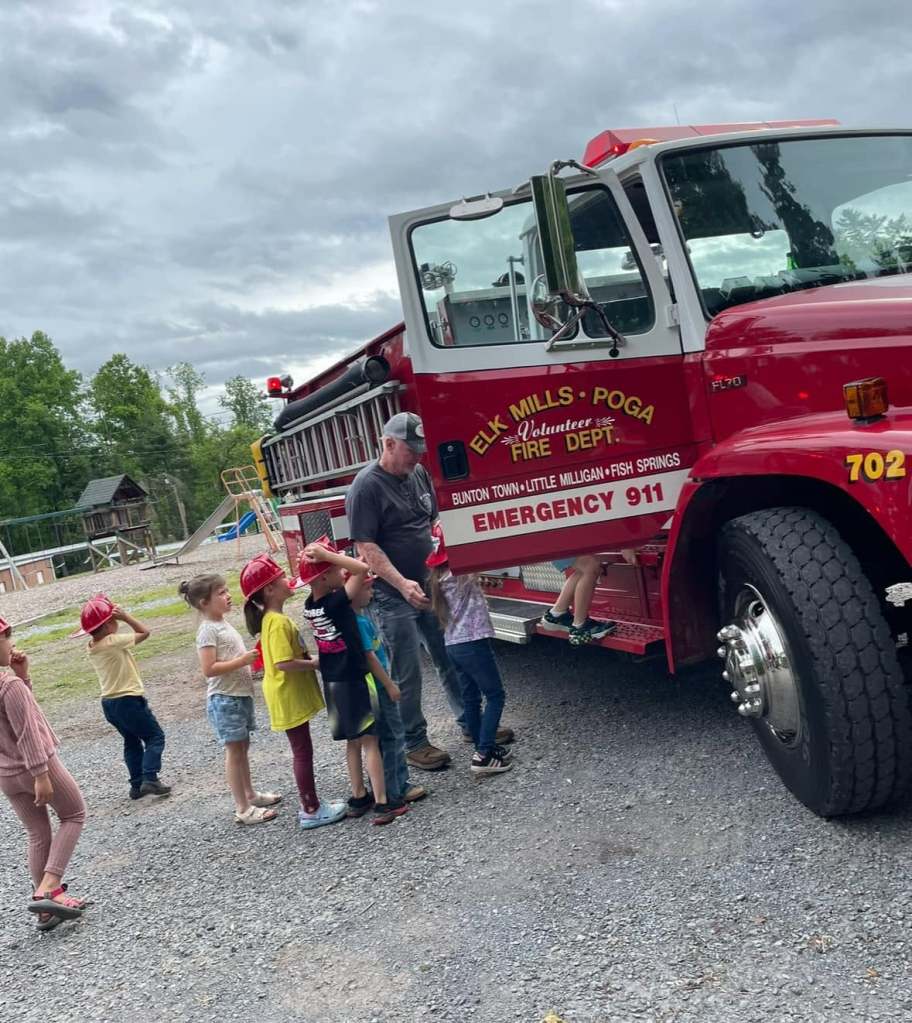
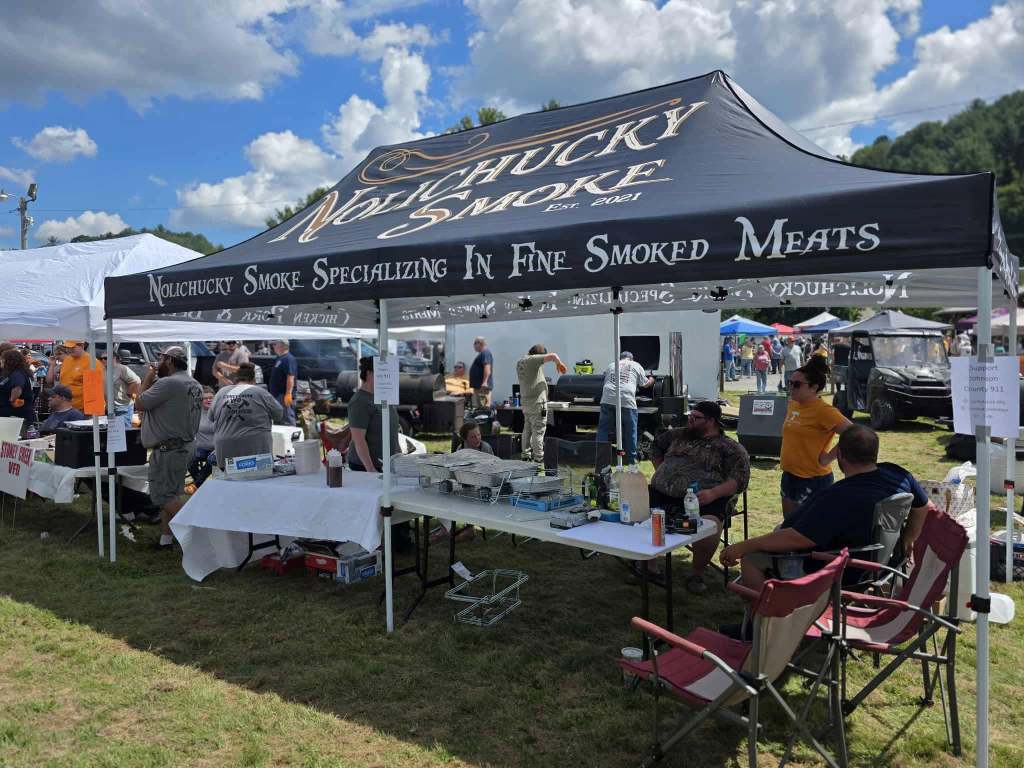
The first Ribfest was held at Doe Mountain in July 2024, before Hurricane Helene struck our region. From the beginning, Ribfest was created and operated as a fundraiser for Elk Mills, with other first responder organizations invited to compete, sell food, and keep whatever money they generated from those sales.
Then Hurricane Helene hit in September 2024 and devastated Elk Mills. People throughout the region rallied around the department, including people here in Johnson County and our own volunteer fire departments. A neighboring department had suffered a catastrophic loss, and people stepped up exactly the way you’d hope they would.
By 2025, Ribfest had moved to Ralph Stout Park and had grown considerably. The official minutes from the March 4, 2025, Mountain City Council meeting describe the event as the “Second Annual First Responder Rib Cook-off, a fundraiser for the Elk Mills Volunteer Fire Department,” and then separately state that all first responders would be invited to compete.
It’s been clear that the admission money would go to Elk Mills. The disagreement is over whether the arrangement still works for everyone involved now that Ribfest has become much larger.
Neva Volunteer Fire Department Chief Jason Arnold told me his department made a little less than $1,000 from last year’s event, but he said even that number doesn’t tell the whole story.
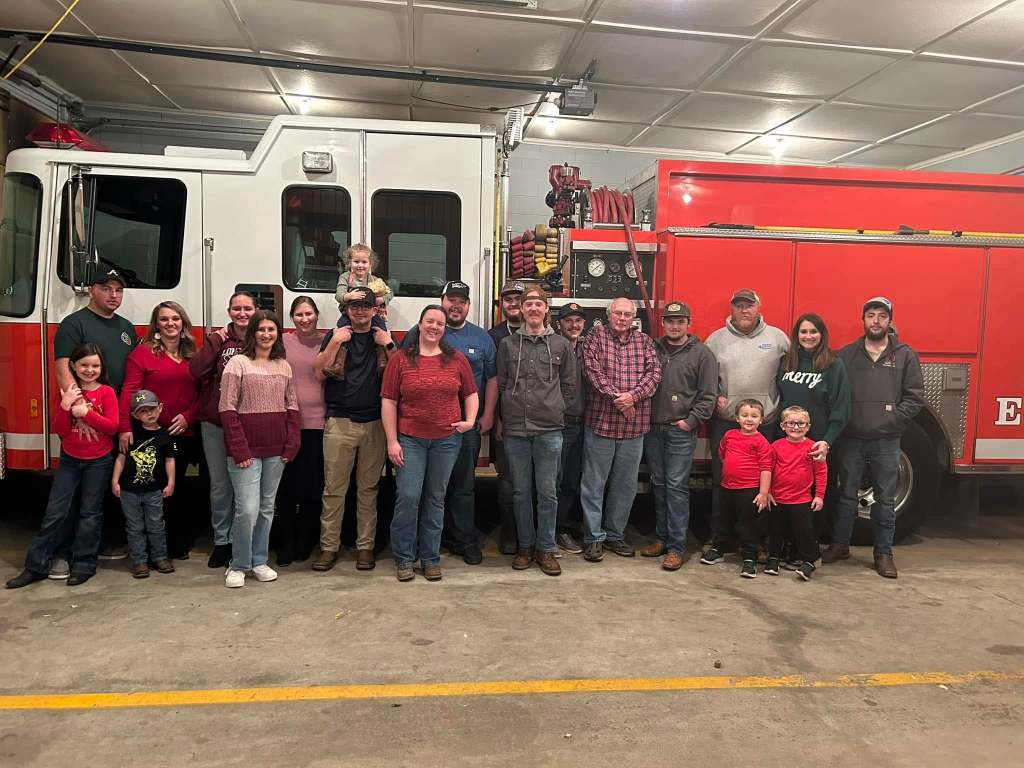
Arnold said three department members and their families, about 15 people altogether, helped prepare food, set up, cook, serve and work the event.
“If we had actually had to purchase everything we used, we would have lost money on the event,” Arnold said. “So, while we technically made a little money, it was really because our own members and their families donated the food and supplies and our volunteers donated their time.”
When I asked whether participating was financially worthwhile for Neva, Arnold didn’t hesitate.
“Absolutely not,” he said. “When you consider the amount of work and resources that went into it, it simply wasn’t financially worthwhile for our department.”
Another Johnson County fire chief, who preferred to speak anonymously, told me his department cleared less than $200 after everything was said and done. By the time manpower, preparation, supplies, and other expenses were considered, he said the return wasn’t worth the effort.
Elk Mills sees that side of the argument very differently.
Darren Clark, who organizes Ribfest for Elk Mills, said Elk Mills handles the venue, vendors, advertising, entertainment, activities, competition logistics, sponsors, insurance, traffic, parking, cleanup, and the countless other pieces involved in putting Ribfest together. He told me he’s personally invested more than 400 unpaid hours organizing this year’s event alone.
Elk Mills also assumes the financial risk. Clark expects the department to have nearly $20,000 invested in this year’s Ribfest before the event is over. If attendance is poor, the weather doesn’t cooperate, or expenses run higher than expected, Elk Mills is responsible for the loss.
Clark’s argument is pretty straightforward: “Participating first responder teams are invited to compete without paying an entry fee,” Clark said. “They are given access to the crowd that Elk Mills has spent months and thousands of dollars bringing together.”
Clark also provided actual numbers from the first two Ribfests.
In 2024, he said Elk Mills spent approximately $3,700 putting on the event and cleared a little more than $10,000.
In 2025, expenses increased to roughly $11,000, while Elk Mills cleared close to $44,000. Clark said much of that money came from donations specifically tied to Hurricane Helene recovery rather than normal Ribfest revenue.
For this year, he projects roughly $20,000 in expenses and, assuming attendance around 3,000 and cooperative weather, approximately $15,000 in net proceeds.
Those numbers provide more context for the revenue sharing debate. Arnold believes Johnson County departments should receive a share of the overall proceeds after legitimate event expenses are paid.
“If Johnson County wants Ribfest to continue being held here, then I believe the proceeds, after legitimate event expenses, need to be fairly split among the Johnson County fire departments,” Arnold said. “If you’re going to hold the event in our county and rely primarily on our residents to support it, then the fire departments serving those residents should benefit from it.”
Johnson County departments have legitimate concerns about putting manpower, supplies, and resources into an event held in their county, and heavily supported by their county, while receiving only what they can generate from their own booth. Elk Mills also has a legitimate argument that you can’t reasonably ask one department to spend months organizing an event, put $20,000 of its own money at risk, do the bulk of the work, and then simply divide whatever is left at the end without anyone else sharing that responsibility.
“We are not opposed to sharing profits,” Clark said, “but we believe that if the profits are shared, the work, expenses, and financial risk should be shared as well.”
Under that type of arrangement, Clark said Elk Mills would be willing to discuss a division of proceeds under an agreed-upon formula with participating departments willing to help with planning, setup, breakdown, cleanup, upfront expenses, and operation of the event.
The bigger problem appears to be that conversation never happened. Clark said no Johnson County chief approached him directly about sharing Ribfest’s overall proceeds before the recent controversy developed. Correspondence he provided shows that, when financial concerns were raised in late July, a Johnson County representative suggested the departments and Elk Mills meet. Clark agreed, but the meeting was never scheduled before the disagreement spilled onto social media.
Clark also provided earlier emails from Johnson County participants following last year’s Ribfest that were positive, and offered suggestions for improving the event, but there was no indication of dissatisfaction about the financial arrangement. Clark says that’s why he felt blindsided by the controversy. But, of course, a department can participate in an event, later sit down with the numbers, and decide it isn’t worth doing again.
Fundraising territory is also a major part of the disagreement. Arnold said Johnson County’s eight departments generally try to respect one another’s fundraising areas.
“We have eight different fire departments in Johnson County that are all trying to raise the additional funds needed to operate,” Arnold said. “Out of respect for the other departments, our department holds an annual letter fund drive within our own district and the community that we serve. We don’t go into another department’s district soliciting their residents for donations.”
“I believe there should be that same level of respect among departments when it comes to fundraising.”
For Johnson County’s departments, fundraising isn’t simply icing on the cake. It’s a necessity.
Each volunteer department receives $35,000 annually from Johnson County Government, with insurance deductions taken from that amount.
By comparison, each Carter County volunteer fire department, including Elk Mills, receives approximately $90,000 annually from Carter County Government.
That’s a large gap before anyone ever holds a fundraiser.
Johnson County departments still have utilities, fuel, apparatus maintenance, equipment, protective gear, and all the other expenses that come with keeping a volunteer fire department running, as does Elk Mills. A few thousand dollars can make a real difference.
The financial condition of Elk Mills has also become part of the public debate, and while Clark’s response adds important context, the numbers help explain some of the frustration coming from Johnson County departments.
According to the most recent publicly available IRS Form 990 or Form 990-EZ filings, Elk Mills reported approximately $1.57 million in revenue, $212,000 in expenses, $1.52 million in total assets, and no liabilities.
By comparison, all eight Johnson County volunteer fire departments combined reported around $690,000 in revenue, roughly $567,000 in expenses, about $1.82 million in total assets, and approximately $232,000 in liabilities.
On the face of it, those numbers create a pretty dramatic picture: Elk Mills reported well over twice the revenue of all eight Johnson County volunteer fire departments combined, but Clark says looking at those figures without context doesn’t tell the whole story.
According to Clark, a substantial amount of the money Elk Mills currently has came from insurance proceeds following Hurricane Helene and from donations made after the disaster. He said the department lost its station, equipment, tanker, gear, and other property accumulated over decades.
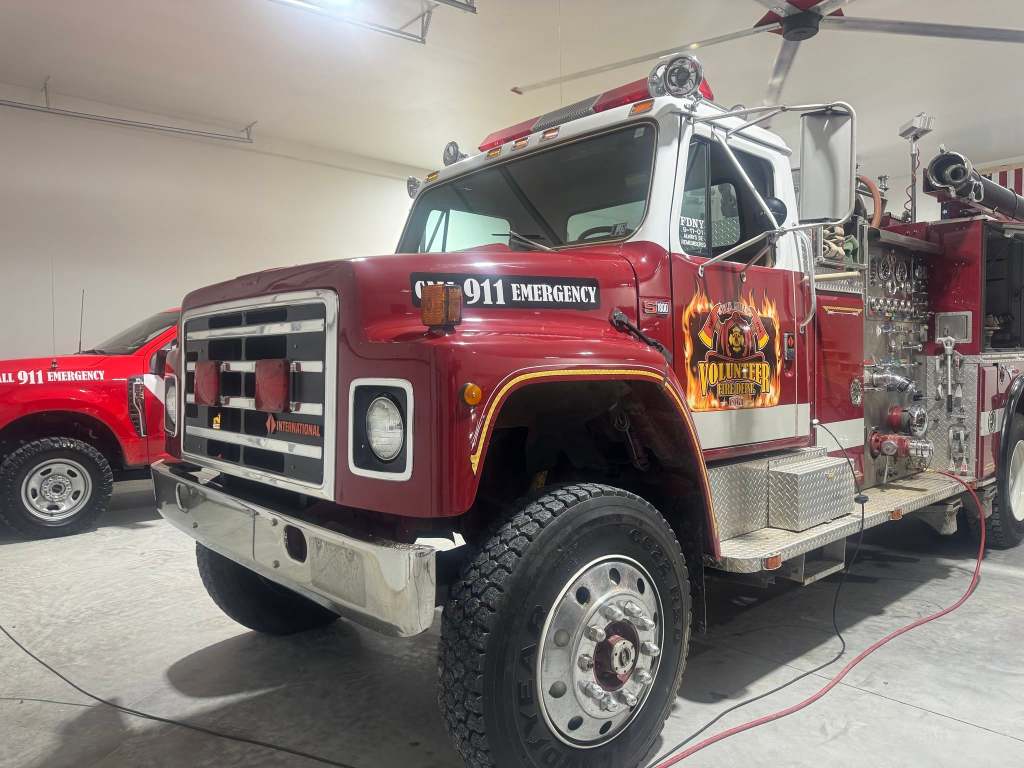
The new station that’s been built has three bays, compared with the five-bay station that was destroyed, and Clark says it’s ultimately intended to become a substation. The department is still working toward acquiring property and eventually constructing a new main station.
Clark said Elk Mills hasn’t received federal rebuilding money. The department did recently receive state funding designated for a new tanker, but he says insurance proceeds and donations won’t be enough to replace everything that was lost and construct the planned main station.
So, while the public 990 figures remain relevant to understanding why some Johnson County departments look at the situation the way they do, they also need to be viewed alongside what Elk Mills lost, where much of that revenue came from, and what Clark says the department still intends to rebuild.
There’s also another side to the financial equation. Clark estimates last year’s event drew around 3,000 people, while some metrics indicate as many as 4,000 people may have visited Ralph Stout Park that day. Those visitors bought food, possibly stayed overnight, shopped, purchased fuel, spent money with vendors, and supported local businesses.
That economic benefit to the county is undoubtedly very real, but it’s also different from directly funding the volunteer fire departments serving Johnson County.
And that brings us back to the larger question. Ribfest is and has always been an Elk Mills fundraiser, but it’s held in Johnson County, whose residents support it, while their own fire departments struggle to scrape together operating money.
Both of those things can be true at the same time.
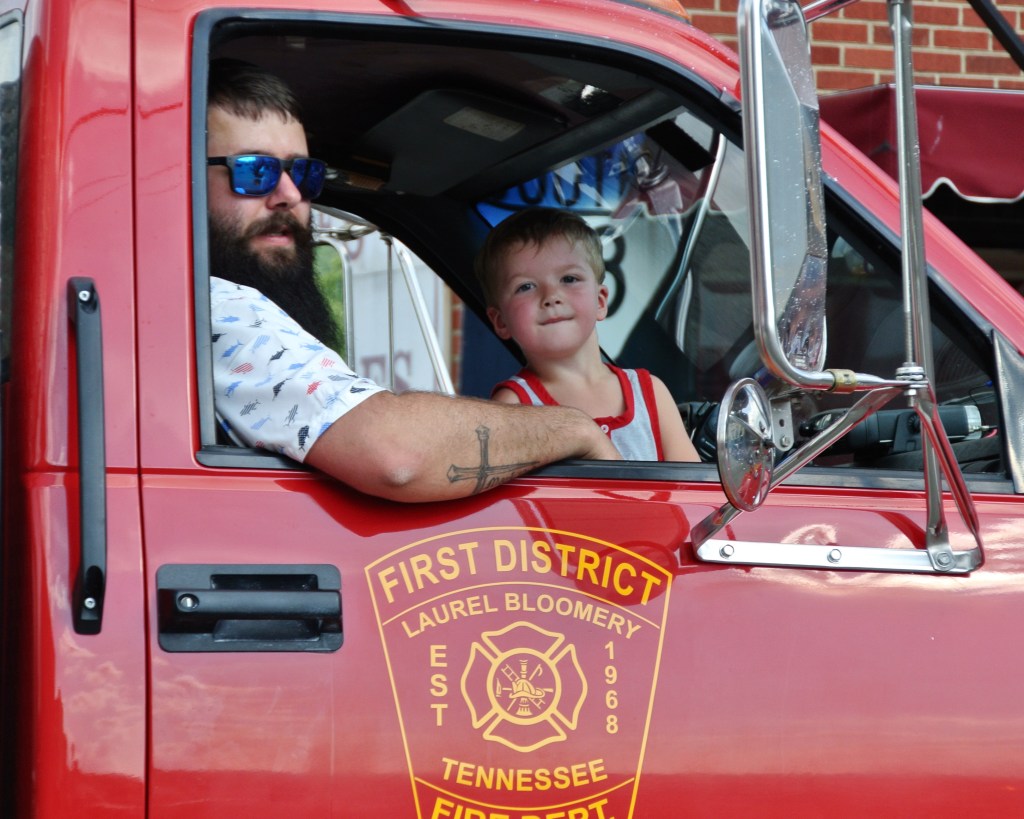
For Neva, the frustration has reached the point where the department has decided it won’t participate this year.
“At this point, our department as a whole has decided that we will not participate in or support this event being held in Johnson County as a fundraiser primarily benefiting a department from outside our county,” Arnold said.
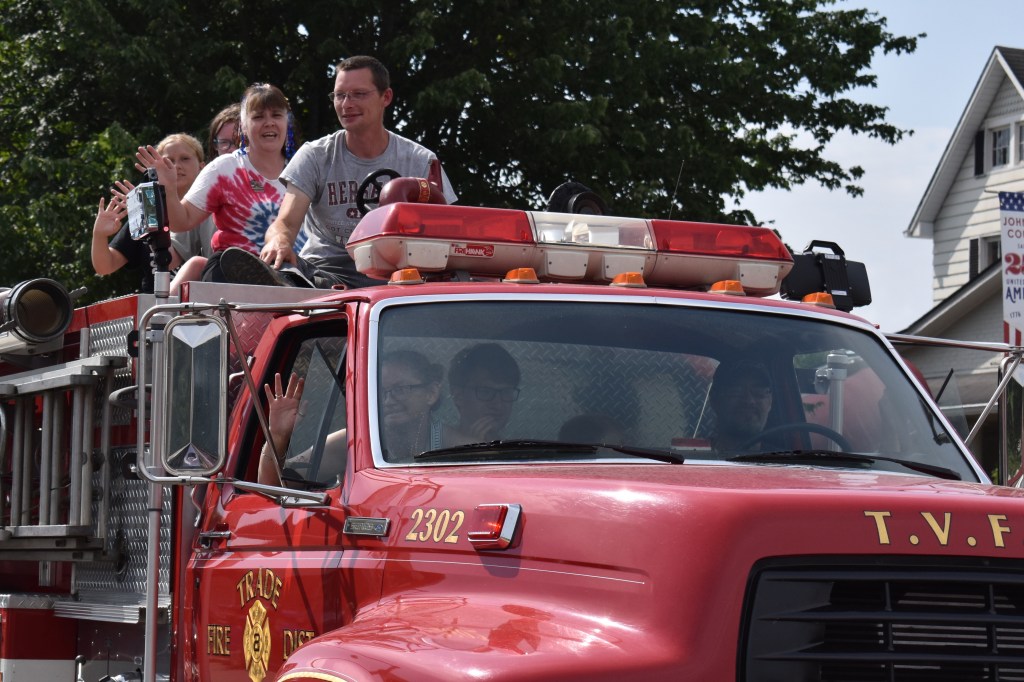
And Neva isn’t the only Johnson County department that won’t be there. For various reasons, none of Johnson County’s eight volunteer fire departments will be participating in this year’s Ribfest.
For an event centered around first responders, that’s hard to ignore.
Clark says the controversy has also left him questioning Ribfest’s future. After putting more than 400 hours into this year’s event, he said being hit with concerns only weeks before Ribfest, instead of discussing them months ago, has taken much of the enthusiasm out of organizing it. Whether Ribfest continues beyond this year, he said, will have to be reevaluated after the event.
There’s one thing Arnold and Clark clearly agree on, though, and it may be the easiest part of this entire mess to fix. They both keep coming back to communication.
Arnold told me Johnson County’s departments currently work well together and that he wants that to continue.
Clark said essentially the same thing from his side.
“At the end of the day, I don’t want this to be about Elk Mills versus Johnson County,” Clark said. He’d rather sit down with the chiefs, put everything on the table, clear up the misunderstandings, acknowledge legitimate concerns on both sides, and figure out how to move forward.
That’s probably where this should have started.
Fire departments all eat at the same table, and here in Johnson County especially, they have to fight and scrap for every crumb they can get. Funding is tight, equipment is expensive, volunteers are hard to find, and every dollar counts.
Ribfest has changed considerably since it began, and as the event grows and circumstances change, it’s reasonable to take another look at whether the original arrangement still works for everyone.
Maybe that means revenue sharing. Maybe it means Johnson County departments taking on part of the cost and workload in exchange for part of the overall proceeds. Maybe the current arrangement remains largely intact, with other changes that give participating departments a better opportunity to make money.
Fixing this requires both sides coming together and finding a solution. Put the actual numbers on the table. Talk about the workload, expenses, risks, fundraising concerns, and what each department needs to make participation worthwhile.
For all the disagreement surrounding Ribfest right now, both sides are ultimately saying something remarkably similar: they wish the conversation had happened sooner.
There’s still time to have it.


One thought on “Who Gets a Slice of Ribfest?”