
BluSky may have withdrawn its plans for Mountain City, but the questions surrounding data centers and their place in Johnson County remain.
Data centers have moved from the realm of Silicon Valley wonk sessions to the forefront of public consciousness, even becoming an issue in the 2026 midterm elections. As artificial intelligence and other digital technologies become increasingly important in our lives, so does the infrastructure required to support them. The question isn’t whether data centers should exist, but where they should be located, and whether their benefits outweigh their costs to the communities that host them. Opponents cite electricity, water, noise, and environmental impacts, while proponents cite jobs and tax revenue.
What comes to mind for many people is the approximately 5,000-acre “Data Center Alley” in eastern Loudoun County, Virginia. Its roughly 200 data centers collectively use approximately 3,000 megawatts of electricity, equivalent to the demand of about 2.5 million households. They also use approximately 4.5 million gallons of water daily, or 1.64 billion gallons annually. The industry has generated approximately 17,000 jobs, including temporary construction and permanent positions, and produces approximately $1.3 billion in annual tax revenue, representing about 40% of Loudoun County’s annual budget.
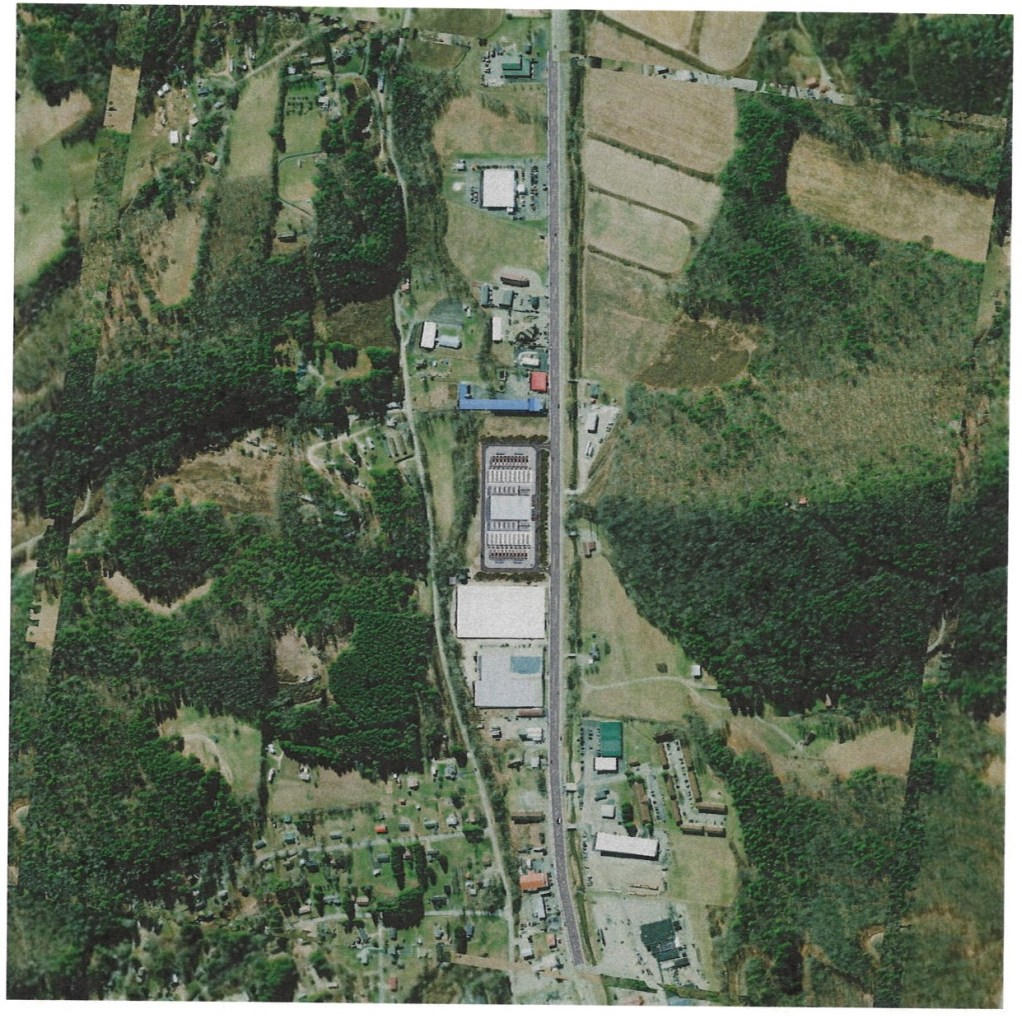
In March 2026, the Town of Mountain City adopted an M-2 industrial zoning classification to specifically include data centers and Bitcoin mining operations. On October 22, the Mountain City Municipal Planning Commission rejected James Phipps’ application to rezone an approximately eight-acre vacant lot at 1455 S. Shady Street from M-1 to M-2 to accommodate a BluSky AI modular data center. The next step will be a public hearing before the Board of Mayor and Aldermen on December 1, followed by a vote.
It appears that the issue is already settled and that the rezoning application will once again be denied. BluSky has made clear that Mountain City is no longer part of its plans, essentially saying, “If you don’t want us, we don’t want you.” Nonetheless, social media is afire with calls for storming City Hall in protest. So it makes sense to separate the facts from the frenzy and take a look at what Phipps and BluSky were actually proposing.
First and foremost, it is not, nor could ever be, comparable to Loudoun County. The more relevant question is: What kind of data center might operate here?
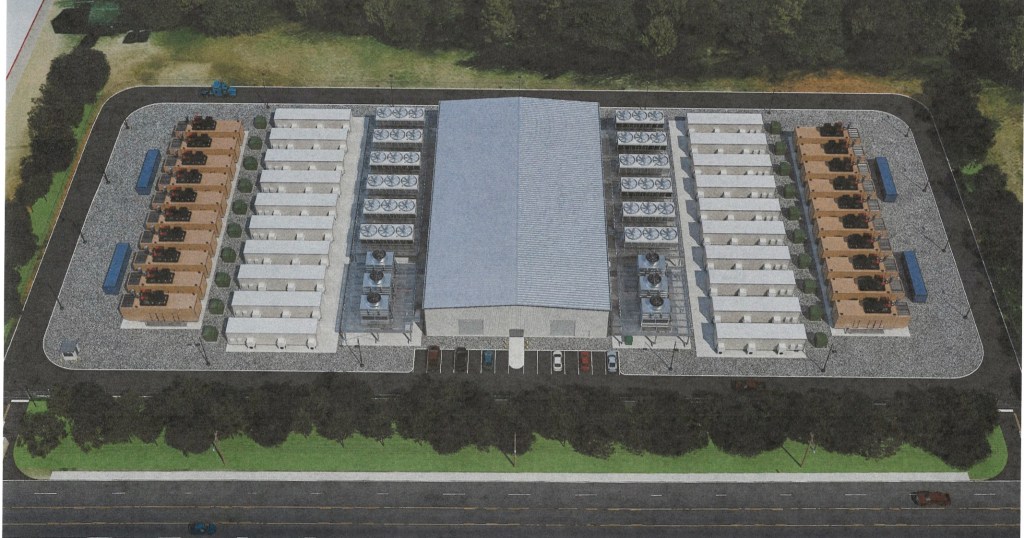
BluSky AI Inc. describes its SkyMod system as a scalable, modular alternative to traditional data center campuses. Its facilities can range from one to 60 megawatts, and the company anticipated a 45-megawatt facility in Mountain City.
Smaller modular data centers are becoming increasingly common. Jones Lang LaSalle (JLL), a global commercial real estate firm, projects 35% annual growth in sales of modular data center systems and micro data centers through 2030. These systems offer geographical flexibility, require less space, and can be expanded as demand increases. Because the modules are manufactured elsewhere and shipped to the site, they also require less on-site construction and can begin operating more quickly.
But a 45-megawatt facility still requires a substantial amount of electricity. Would it require additional infrastructure, and would it affect local electrical rates?
According to Rodney Metcalf, general manager of Mountain Electric Cooperative, the utility currently has 45 MW of available capacity in Mountain City that is not being utilized. I asked him to compare the proposed data center with Parkdale, which was a 22 MW facility.
“Most manufacturing facilities have a fluctuating load factor due to motors and equipment cycling on and off throughout the day and night,” he said. “In contrast, data centers typically maintain a consistent load factor of 92% or higher, meaning their power demand remains relatively constant. This provides a more stable and predictable load for the electrical system.”
Metcalf also addressed the possibility of electrical infrastructure upgrades and their effect on local rates.
“A data center would be responsible for covering 100% of the costs associated with any required electrical infrastructure improvements, including transmission and distribution upgrades,” he said. “These costs would not be passed on to the local utility or its members, ensuring that the financial burden of serving the data center remains with the business requesting the service. This is why the argument that electrical rates would increase if a data center moved into the area is inaccurate.”
Tennessee law requires data centers larger than 50 MW to bear their own electrical infrastructure costs.
Water consumption is another major concern, but not all data centers use the same cooling systems.
I asked Trent D’Ambrosio, the CEO of BluSky, about water usage for BluSky’s SkyMod systems. Unlike traditional cooling towers, which rely on evaporation, BluSky’s modules use a closed-loop dry-cooling system. Water or a water-glycol mixture circulates through the equipment, carries heat to outdoor cooling units, and returns to the system. Large fans move outside air across the cooling coils, allowing heat to escape without evaporating the circulating fluid.
D’Ambrosio estimated that a 45 MW Mountain City facility would require a one-time fill of 150,000 to 300,000 gallons of water. That is comparable to the average monthly water consumption of approximately 40 homes, but it would be a one-time draw. After the initial fill, water consumption would be minimal, comparable to other industrial properties with limited water requirements, apart from occasional maintenance or replenishment needs.
Noise, however, remains a concern even with dry-cooling systems.
I asked D’Ambrosio about sound levels, and he replied that “the target level for BluSky AI development site is between 60 dBA and 72 dBA at fence line or property line.”
He compared that with standard industrial sites, which can produce 75 dBA or higher. The 60–72 dBA range is fairly wide, extending from the sound of a normal conversation at three feet to something approaching a loud vacuum cleaner.
Tennessee leaves most noise regulation to local governments. Mountain City’s Municipal Code does address the issue. Section 11-301 states:
“Subject to the provisions of this section, the creating of any unreasonably loud, disturbing, and unnecessary noise is prohibited. Noise of such character, intensity, or duration as to be detrimental to the life or health of any individual, or in disturbance of the public peace and welfare, is prohibited.”
However, the ordinance does not establish specific decibel limits.
Section 7 of the Mountain City Zoning Ordinance, governing M-1 and M-2 manufacturing and warehouse districts, also contains general restrictions. Section 712.3 prohibits industries deemed to cause injurious or obnoxious noise, but establishes no measurable standards for determining when noise becomes unacceptable.
Ordinance 2071, which established the M-2 classification specifically for Bitcoin mining and data centers, contains no numerical noise limits, despite noise being a primary concern for nearby residents. Neither does Ordinance 2072, which establishes site-plan requirements.
Communities across the country are adopting increasingly specific restrictions for data centers, often requiring noise levels of 60–65 dBA during the day and 50–55 dBA at night. Some also require testing before and after operations begin, along with constructed sound barriers.
The fact that Mountain City created an industrial zone for data centers without taking this into consideration is something that needs to be revisited.
The modular design that allows these facilities to be installed quickly also reduces their potential employment benefits. Because the modules are manufactured elsewhere, local construction opportunities are limited. Permanent employment for a facility the size BluSky proposed would likely be between five and 15 people.
With so few permanent jobs expected, increased property tax revenue is pretty much the sole direct economic benefit to the community.
While the $1.3 billion in annual tax revenue generated by Loudoun County is eye-popping, it has not been duplicated elsewhere and is highly unlikely here. Nevertheless, the potential revenue from even a relatively small data center could be meaningful.
I asked Johnson County Tax Assessor Matthew Lewis how a Utah corporation placing modular units manufactured in California on leased land in Mountain City would affect property tax revenue.
“If a company leases property and adds any type of building to that property then yes it is taxable,” he told me. “These units are portable but when the company puts power and a business in them then it ‘ties’ them to that property. When the business starts operating they will also be assessed for business personal property. This includes all machinery that is used for the business. The personal property in this type of set up will generate more tax dollars than the buildings. The value would greatly surpass a storage container. Buildings and equipment would all be taxable.”
For a hypothetical facility in the 35–45 MW range, I asked Lewis to estimate the tax revenue using a $25 million valuation.
“If the buildings on the property are valued at $25,000,000 then the assessment would be 40%,” he said. “That would be $10,000,000 and with the current tax rate that would be $137,510.00 annually. When you add in the equipment that assessment would be at 30%.”
Johnson County and Mountain City combined generate in the range of $10 million annually in property taxes. While Loudoun County’s data center revenue represents approximately 40% of its annual budget, the $137,510 in Lewis’s example would represent approximately 1.37% of our combined property tax revenue, with additional taxes on equipment potentially increasing that amount.
The story of data centers, particularly smaller modular facilities, is just getting started. We are increasingly reliant on what these facilities produce, but we don’t necessarily want to see the sausage being made. That tension between industry and community is as old as the Industrial Revolution.
The question isn’t whether data centers will exist, but where they belong, what they bring to a community, and what they cost. Are there locations in Mountain City or Johnson County that make sense, allowing us to benefit as other rural communities have, or are the costs too great?
This debate will almost certainly return. When it does, residents deserve accurate, up-to-date information about what is being proposed and what its impacts might be.
Equally important is that both Johnson County and Mountain City work to establish meaningful and enforceable requirements that will address real, factual concerns.
For the citizens, it is also clear that using outdated or, ironically, AI-generated opposition material—or equally questionable material supporting development—isn’t the way to go. Fact-based, objective, largely non-emotional conversations between residents will be far more valuable as these decisions become increasingly important.

