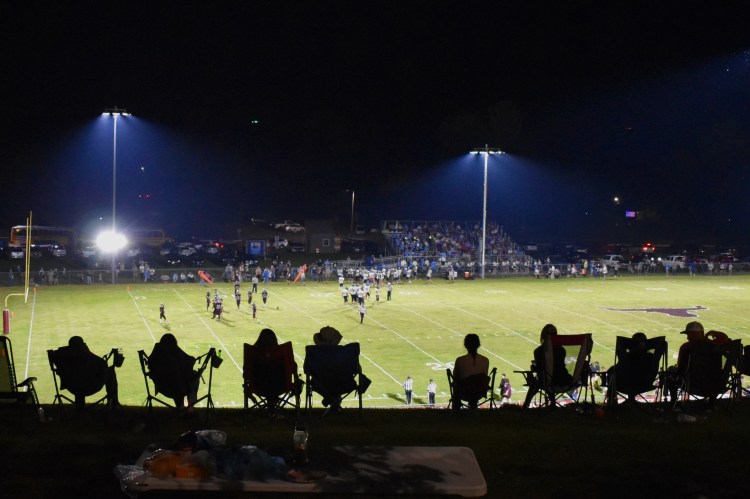
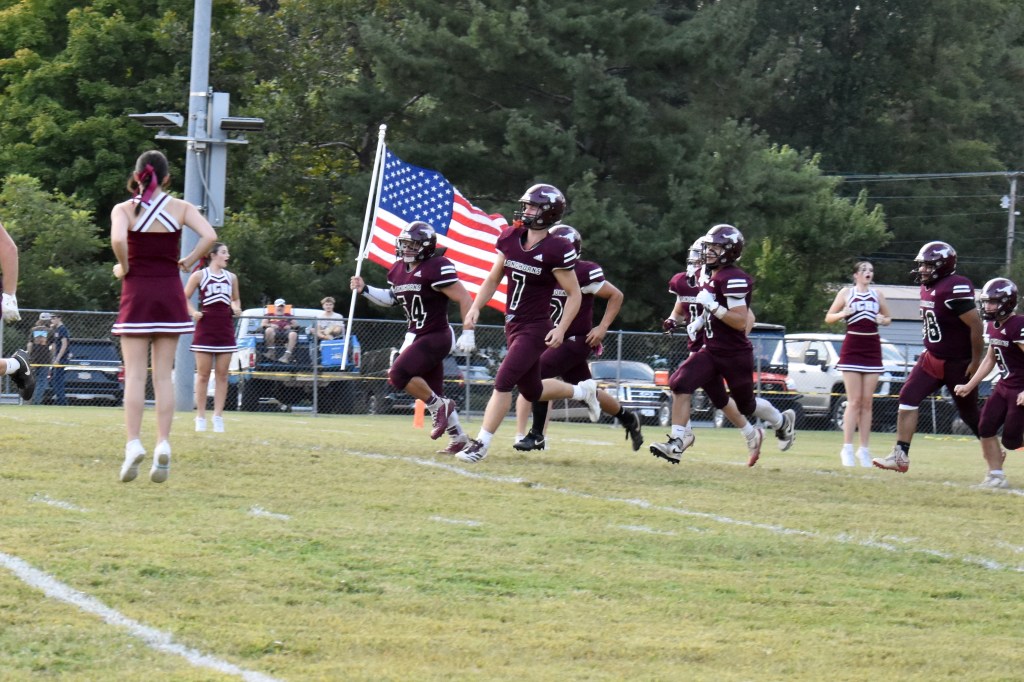
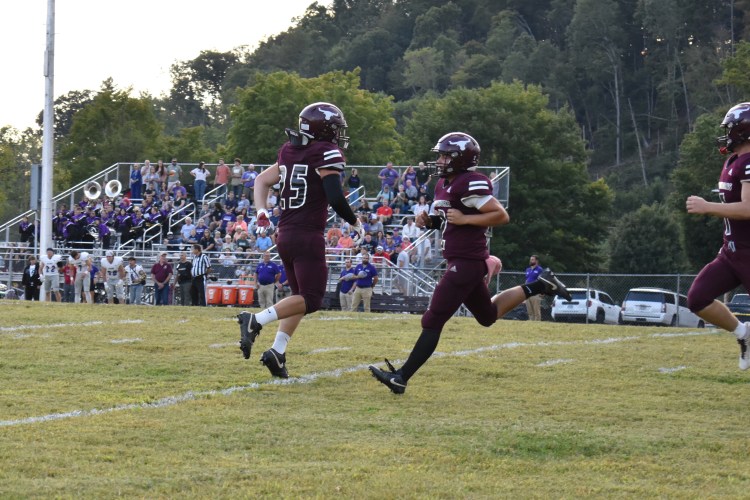
It’s coming on 7, and the sun is headed down, the sky over Mountain City a muted amber. It’s not a packed house at Paul McEwen Stadium tonight, but there is an enthusiastic cheering section along the right-hand side of the front row and a steady line at both concession stands. Then it’s game time, and the crowd erupts as Mason Perry, #54, tears onto the field carrying the American flag, which whips and ripples behind him as he sprints toward the center of the field, side by side with Liam Cain, #7, matching him step for step.
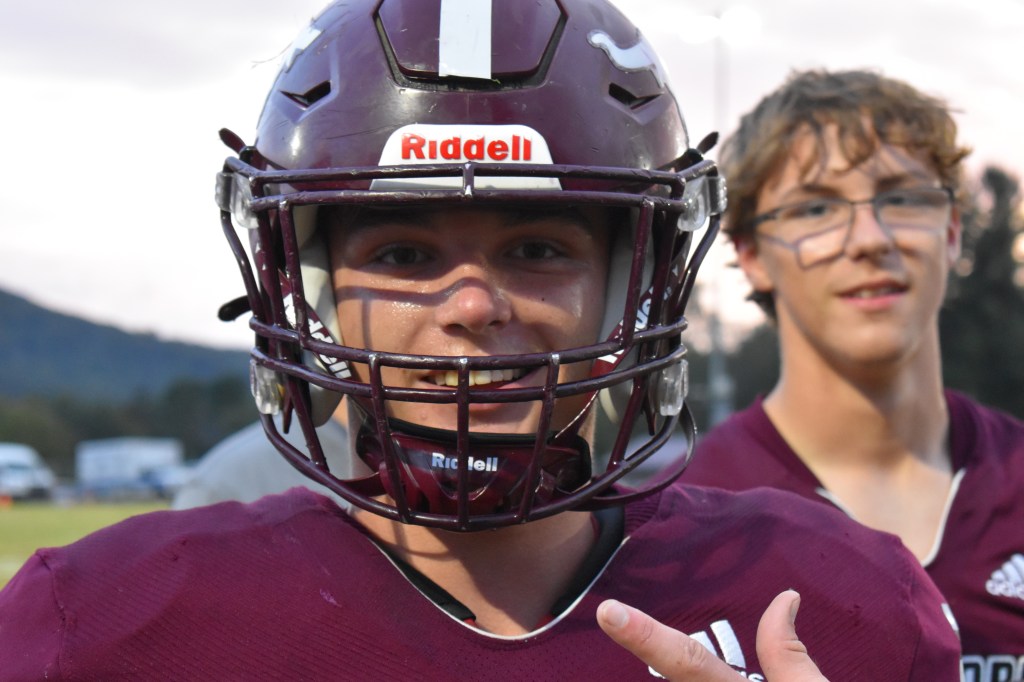
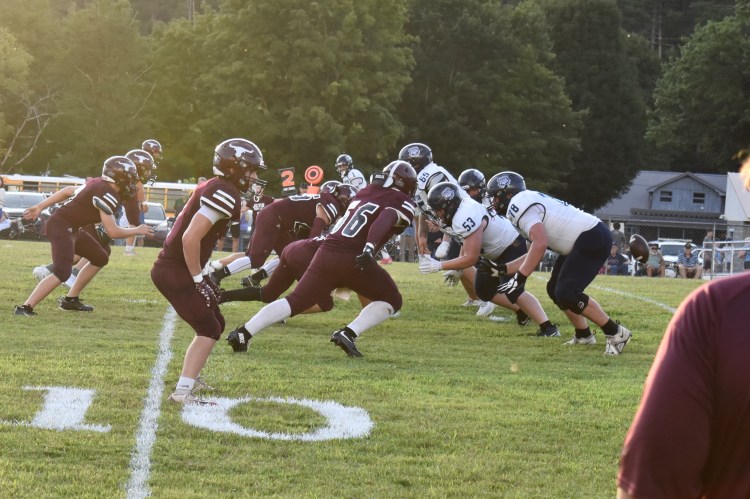
By the end of the night, the Longhorns will have delivered a 26-0 thumping to the Ashe County Huskies, and the crowd will have roared itself hoarse. But the guys charging onto the field are coming off a rough start to the season, with three big back-to-back losses. You’d never know it, though—not watching the players, not watching the coaches, and not watching the stands.
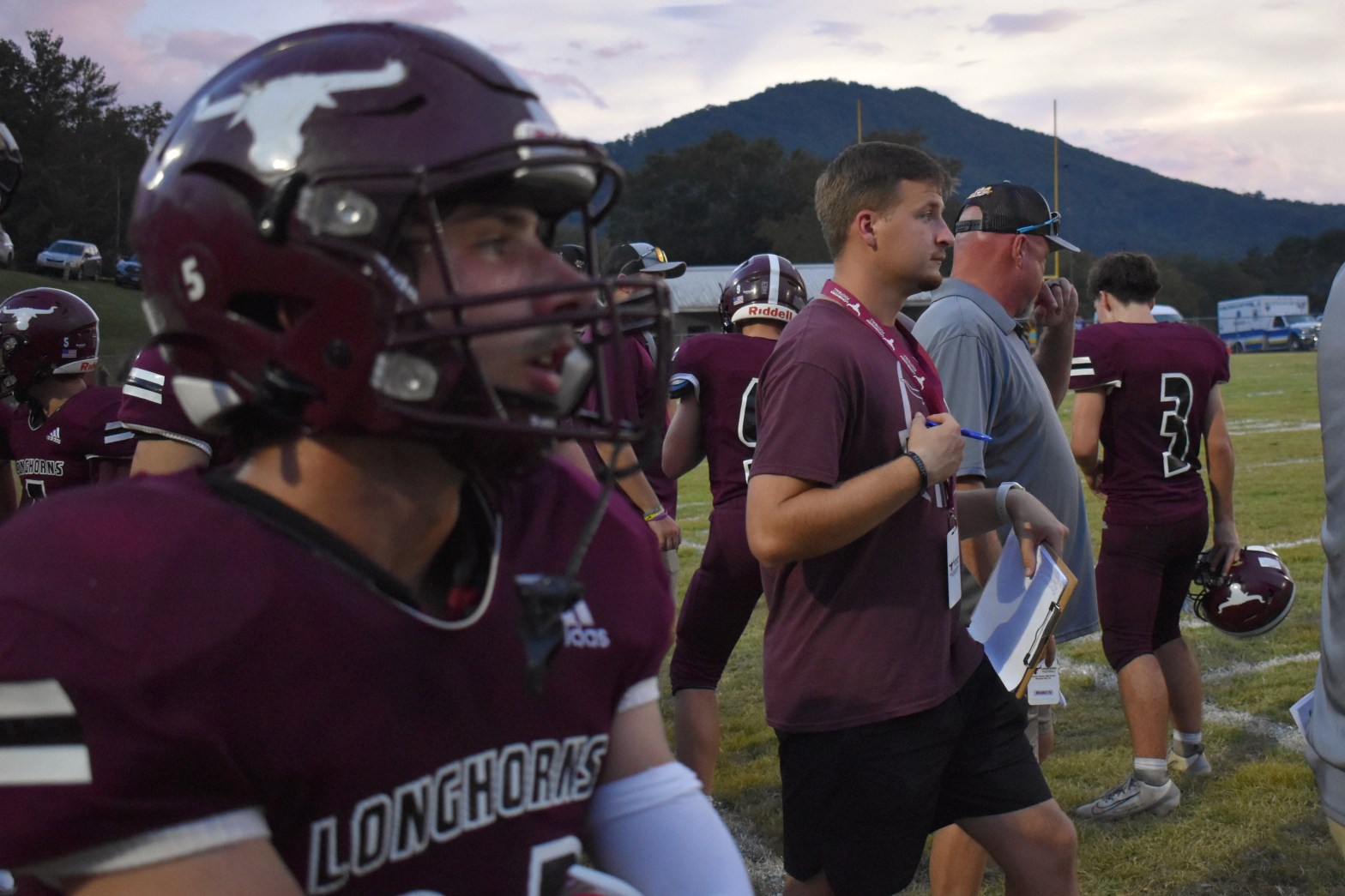
“Having a team like the Longhorns, one that is all hard work and effort and does not give up no matter the score or situation, means a lot to the community,” says Assistant Coach Andy Starnes. “That is what the community has based our image on for generations.”
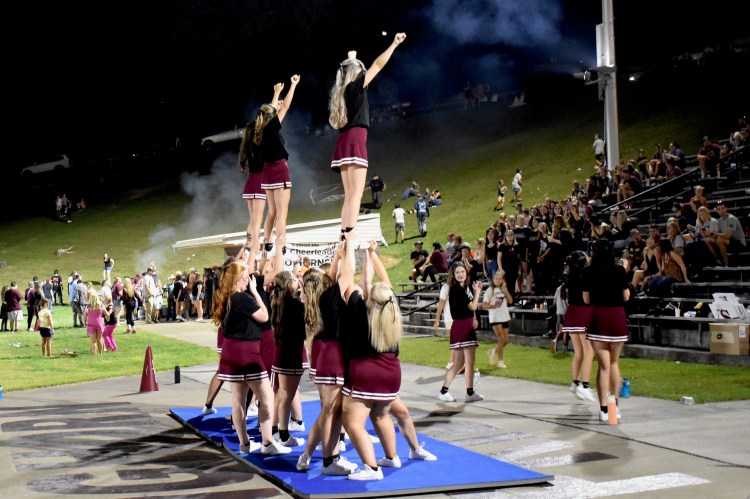
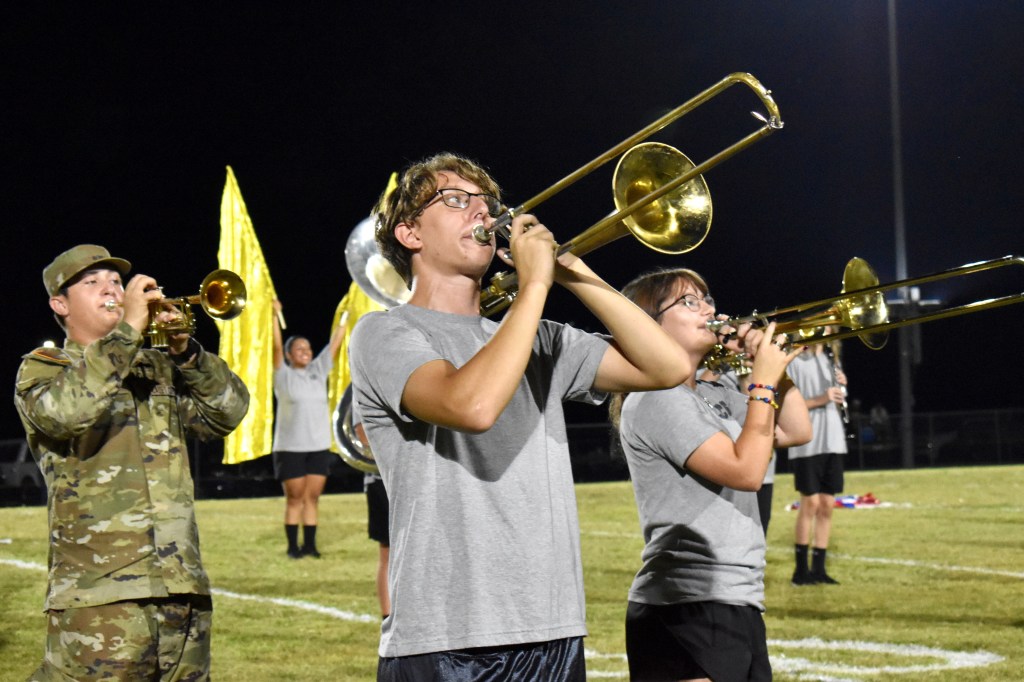
This is the 100th anniversary of football in Johnson County. Starnes’ description of the team is also a description of the county and the town: schoolwork by kerosene lamp, families stretching the food budget, clothing passed from one kid down to the next, the winding drive over mountain roads to get to school, and the hard work in the fields after.
Workers. Hard workers.
Starnes describes three of his players, Liam Cain, Colton Osborne, and Dylan Vanover, as “utility tools.” You can put them anywhere.
“We never have to question Colton’s effort,” he says of #4, Colton Osborne. “He’s hard-nosed, he’s got good hands. You can see that with that over-the-shoulder catch on offense and that interception on defense.”
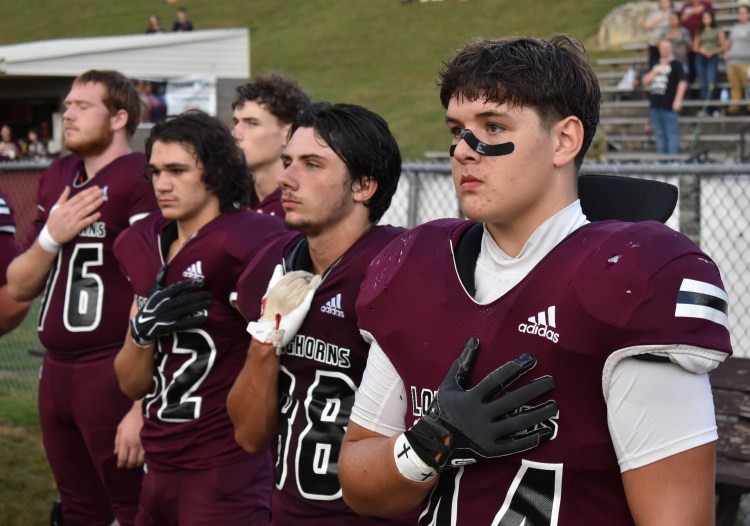
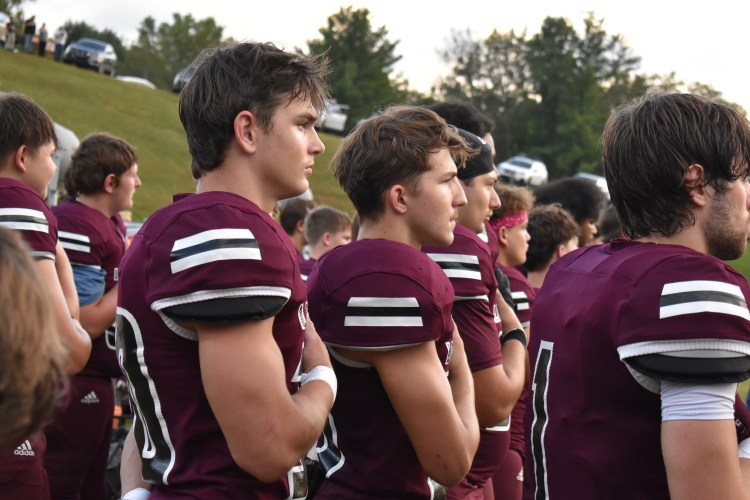
“Typically in football, you don’t have a 5’7” kid play on any kind of line,” Starnes says of #23, Dylan Vanover. “But last year and this year, he’s had to play offensive line, and he’s excelled at it, and it’s shaping his success on defense. He’s a prime example of a team-first attitude.”
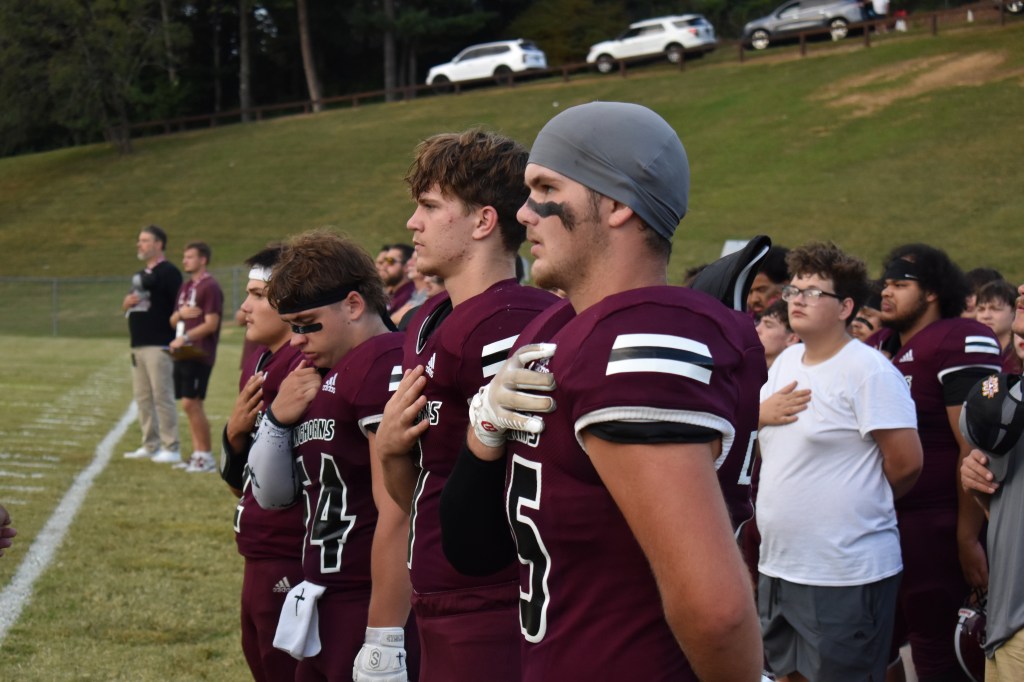
Of Liam Cain, #7, he says, “If there was a poster child for our weight room, it would be Liam. He’s been in the weights ever since he came on in the summer of his freshman year. He can play line, but he can also run the ball. His blocking and running style reflect his work in the weight room. The best word I can use to describe Liam is gritty. And to be a good football player, you have got to have some grit in you.”
Because that is what a team is. What it does. And the Longhorns are Johnson County’s team, just like the county itself is, at its heart and at its best, a team.
The guys on the team start young. Older players teach them, coaches train them, and they get their number, their place on the roster. They get their job, and they do it, and people notice, and they belong. People depend on them. They carry that out into the world.
In the fall of 1949, Tommy Jack Johnson ran onto the field as captain of the Longhorns. Two years later, that Johnson County grit—that never-give-up-no-matter-the-situation grit—carried with him to Heartbreak Ridge in Korea. There, he ran through enemy fire, carrying wounded brothers to safety, only to fall himself on September 23, 1951, far from home. He died doing what he learned here: looking out for the guys beside him.
That legacy of grit shines tonight in Johnson County. Coming off an 0-3 record, the Longhorns absolutely shut down Ashe County, giving no ground. By the end of the game, Brayden Dickens had run in three touchdowns, and Jacob Frauenthal had run in one. No one left early, and even when the game ended, no one was in a hurry to go. The crowd stayed as the guys ran off the field. They mingled and talked under the lights, the scoreboard blazing out the victory. It’s a game people will talk about. They’ll remember. They’ll be glad they were here.
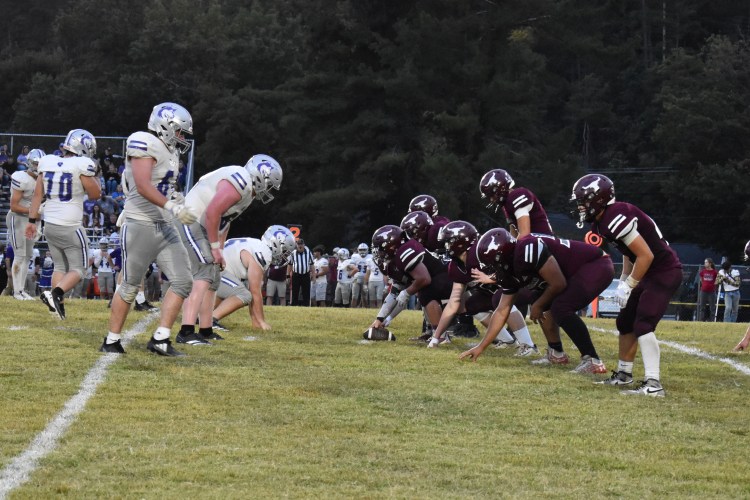
Like the game Jett Arnold, the Longhorns’ first #78, played against the Elizabethton Bulldogs. He played from 1967 to 1971, but this memory stands out: the seven sacks he got, the touchdown he ran in, the steak dinner a supporter made for the guys a week later. He’ll stand on the field again tonight as the county honors the players from the 1970s.
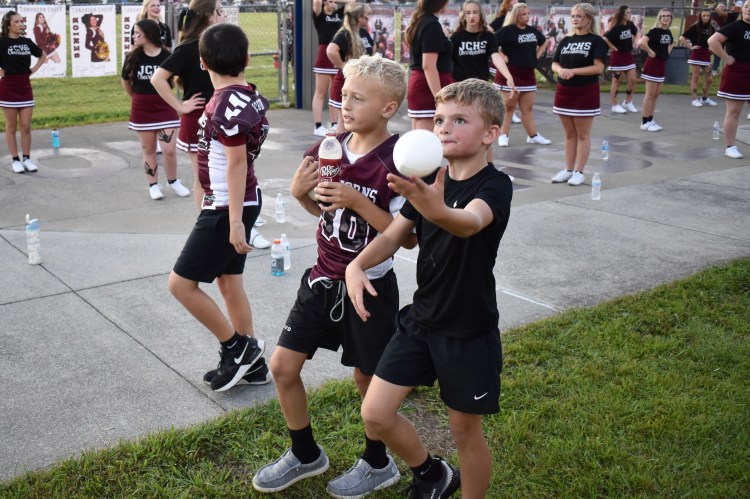
If I were a sociologist, I might use words like “community ritual” or say that football is how a community expresses and reproduces its identity. I suppose that’s true in its own way, but why use words like that when you can see it in front of you? The laughter of the guy in the stands who, not so long ago, was on the field. The third-grader tossing the ball with his friends over there in the grass, waiting his turn to put on the Longhorns jersey; to get his number.
And the guys celebrating in the field house tonight. This singular group, this singular moment, never to be repeated again. There have been other teams, and there will be other teams. No matter what gets thrown at Johnson County, no matter when the factories closed and the jobs disappeared or when a rogue hurricane drove people from their homes, come September, there was a team. But not this team. These guys. Those hot August practices and night rides home on the bus may have happened before, but for each team, their time is theirs—unique and golden.
Charlie Thompson was a Longhorn from 1965 through 1968, and he describes his team as a band of brothers. When he played his last game, he said, “I felt like I had lost my best friend.”
Grit. Think about that. The history of this county and the history of this team. Through boom and bust, come fall, the town has gathered to watch its boys play. When the flood washed the train away and the waters rose over the roofs of Butler, Johnson County held together, and the boys played football. When the bean crop was putting money in everyone’s pockets, and when automation took those jobs away, Johnson County stayed strong, and the Longhorns took the field.
That brotherhood is something Jordan Edes-King remembers well. He played tight end and defensive end for the Longhorns’ record-breaking season in 2017. “Every Thursday night the team would get together at Bud Icenhour’s house for a night of NCAA and just good ole times with the boys,” he says. “There would be about 20-30 of us in his house just acting a fool and enjoying the time together. The brotherhood we had was nothing I’d ever seen before and I still appreciate it ‘til this day.”
But like Thompson, his time also came to an end.
“I felt a huge amount of accomplishment. Being the best team in school history means a lot to all of us and still does. But there was a feeling of sadness as well, knowing that I wasn’t going to be strapping it up again with my brothers in the spring when workouts started again.”
This team will take their helmets off at the end of their last game, too. But when they do, their brothers, and then their sons, and then their grandsons will take their place, and the lights will come up on Friday night in Mountain City, and the crowd will roar, and so it will be for another 100 years.
God willing.